
Growth
Length of the main stem, or growth of the main stem from the previous week to the current week. Using a permanent marker, mark the tomato vine hanging string at the top of the plant head. During the next measurement, for example after a week, mark the top of the plant on the string and measure the distance between the two marks.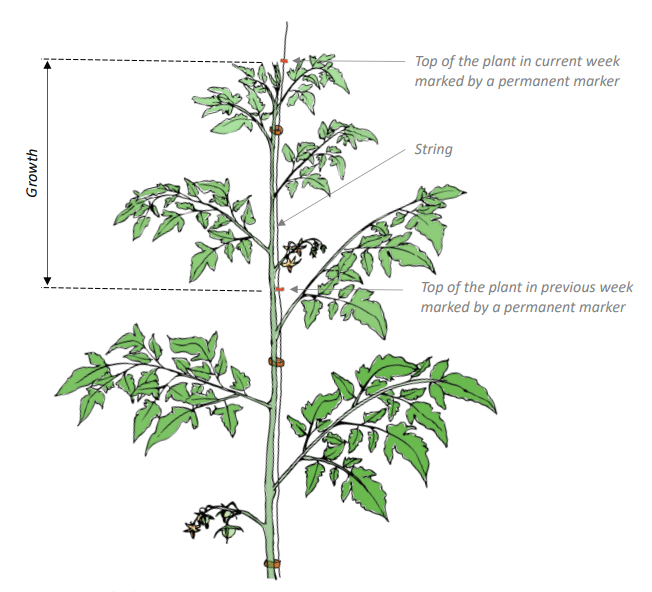
Head density
Number of stems or branches per m², calculated by dividing the total number of plants of a type or variety by the area those plants occupy.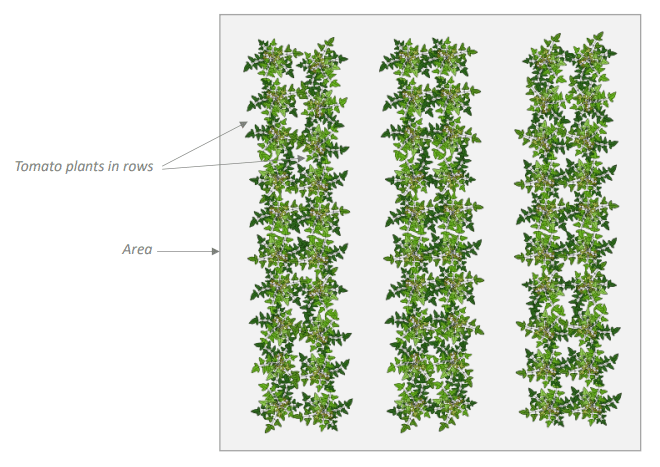
Stem diameter
Diameter of the stem measured at the previous week’s mark on the string.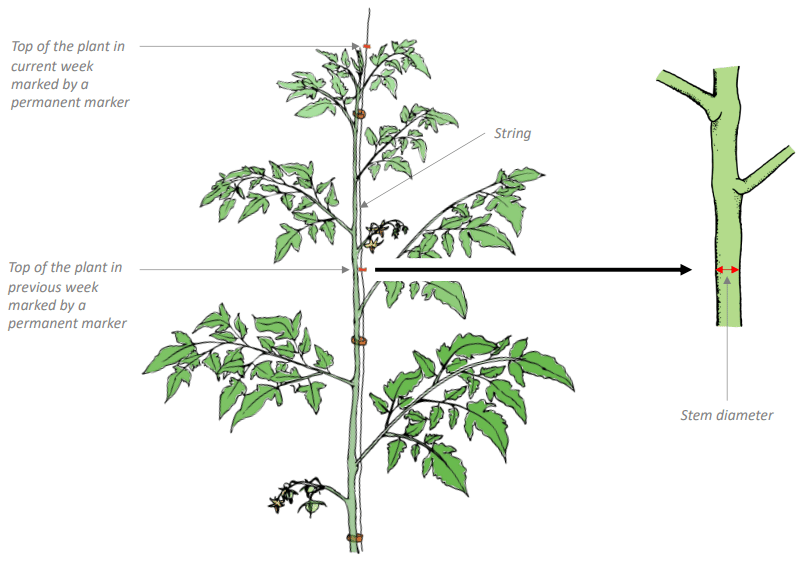
Leaf length
Length of the topmost mature leaf, usually the 5th or 6th leaf more than 15 cm from the top of the branch or stem. Measure leaf length from the base of the leaf to the tip.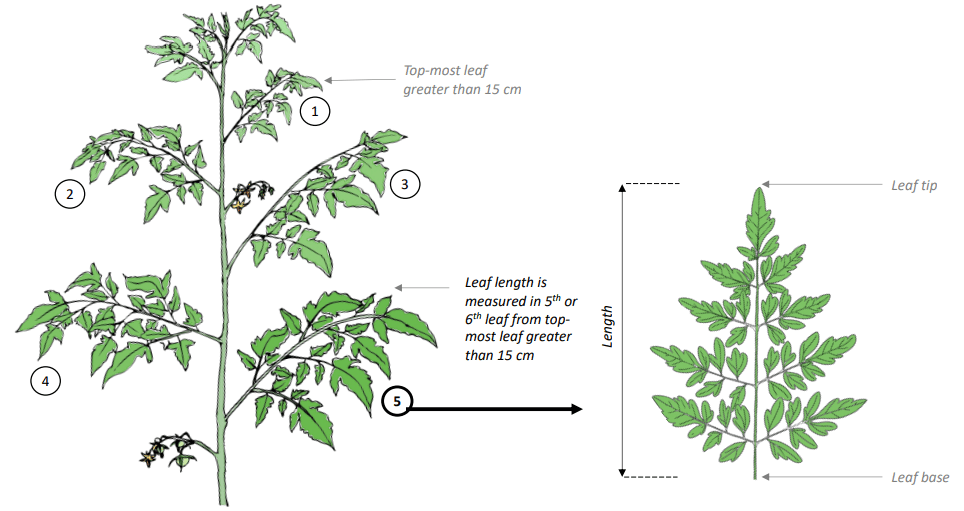
Leaf width
Width of the topmost mature leaf, usually the 5th or 6th leaf more than 15 cm from the top of the branch or stem. Measure leaf width at the widest point of the leaf.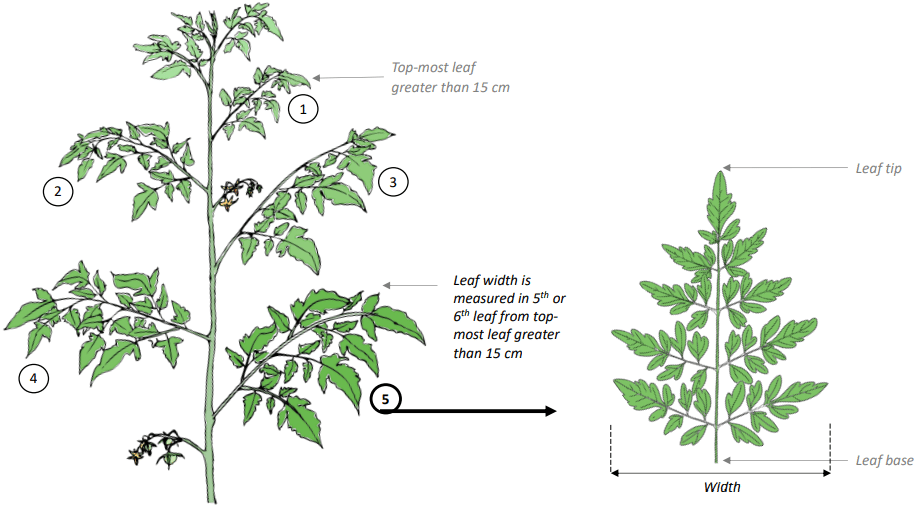
Leaves per plant
Number of leaves on the plant which has a leaf length greater than 15 cm.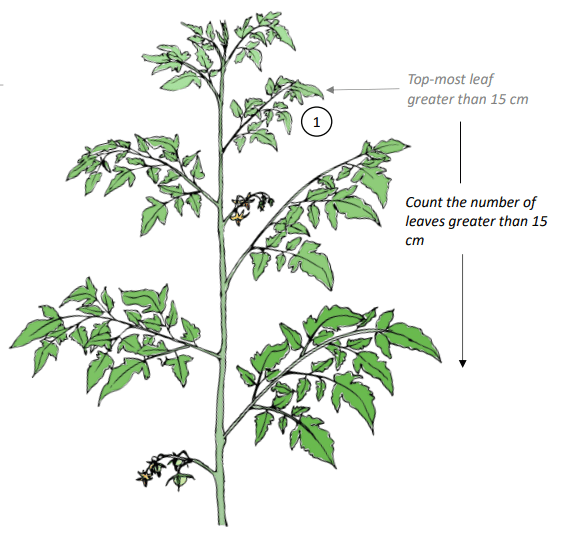
Top to flowering truss
Distance from the topmost flowering truss to the top of the plant. If there is no flowering truss, measure the distance from the top of the plant to the previous mark on the string, which is equal to the Growth measurement.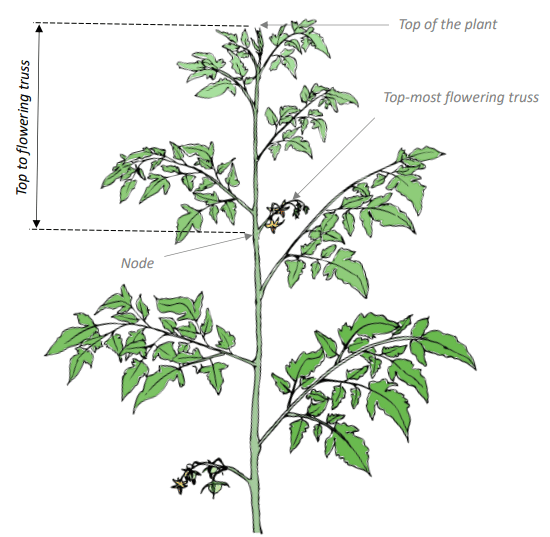
Truss height
Distance measured from the node of the topmost flowering truss to the node of the next truss below. If there is no flowering truss, measure the distance from the top of the plant to the topmost set truss below.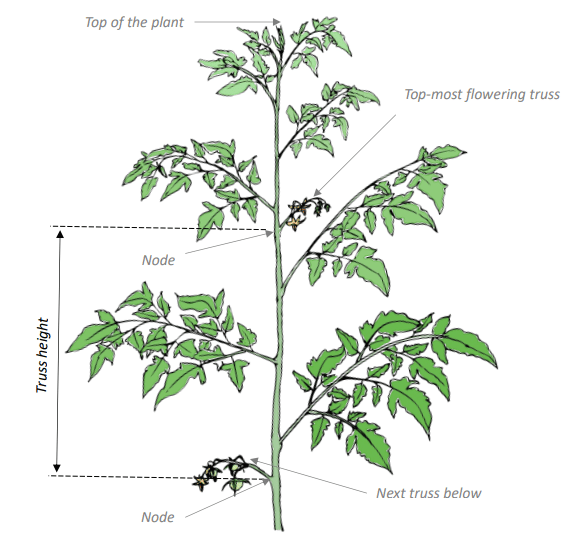
Flowering truss
Topmost flowering truss. This is recorded as a decimal number. Each open flower or set fruit in a truss is counted as 0.1. Always start counting from the open flower or set fruit at the base of the truss. Count any missing open flowers or set fruit as 0.1. For example, truss 19 has 2 open flowers, 2 partially open flowers, and 1 bud, while truss 18 is fully set and complete. Therefore, the flowering truss notation would be 18.2.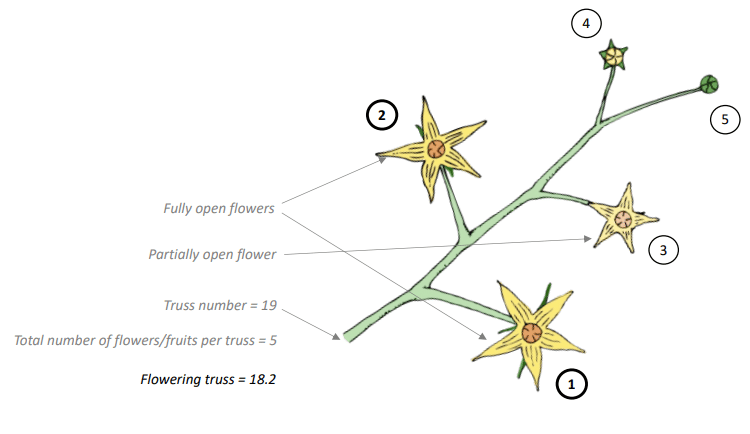
Set truss
Topmost set truss. This is recorded as a decimal number. Each open flower or set fruit in a truss is counted as 0.1. Always start counting from the open flower or set fruit at the base of the truss. Count any missing open flowers or set fruit as 0.1. For example, truss 18 has 2 set fruits, 2 open flowers, and 1 bud, while truss 17 is fully set and complete. Therefore, the set truss notation would be 17.2.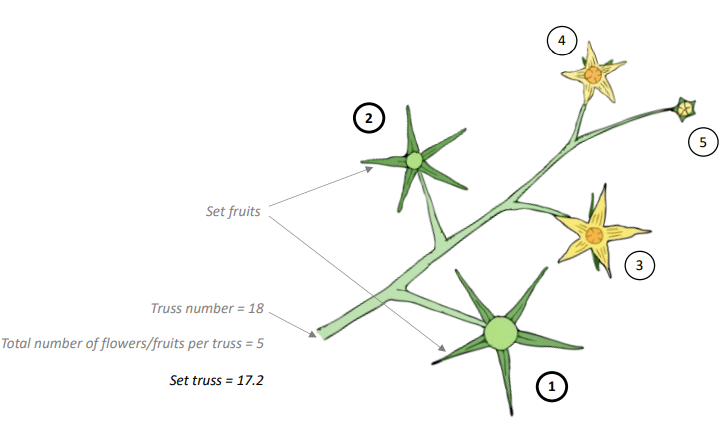
Flower number per plant
Total number of open flowers per branch. Open flowers are usually found on the top truss. For some beefsteak varieties, for example, there may typically be a maximum of 5 or 6 flowers, depending on how many flowers the grower plans to keep per truss. In this case, 5 flowers may indicate good flowering. A reduced number of flowers may indicate sub-optimal flowering, vegetative behavior, climate impacts, or plant management decisions by the grower to keep fewer flowers, for example due to a poor weather forecast. For example in the image below, there are 2 open flowers.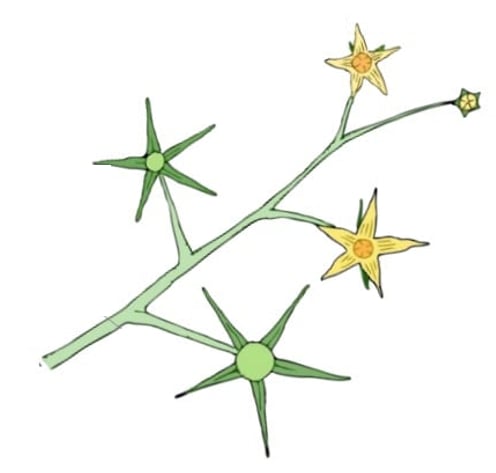
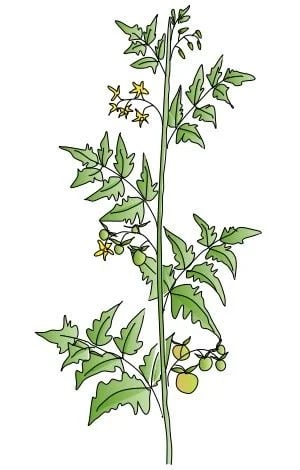
Fruit number per plant
Total number of fruit on the plant.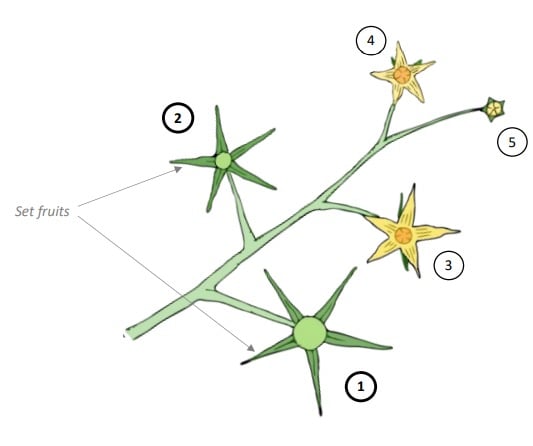
Harvest truss
The truss to be harvested in a given week. This is recorded as a decimal number. Each fruit in a truss is assigned 0.1. Count any missing fruit as 0.1. For example, if two fruits are harvested from truss 10, the harvest truss notation would be 9.2.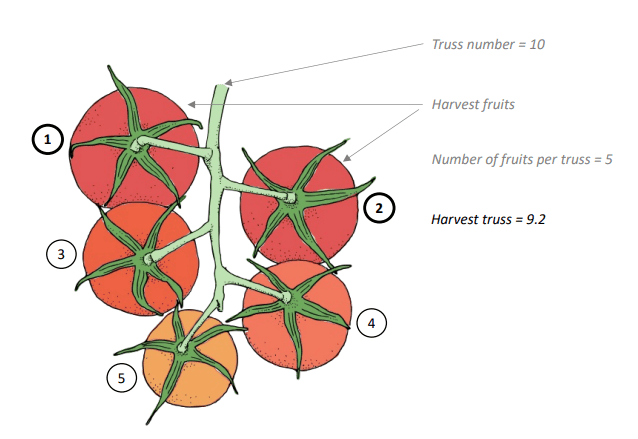
Fruit diameter
Diameter of fruit 1: Diameter of the first fruit of the bottom most complete/unharvested truss. Diameter of fruit 3: Diameter of the third fruit of the bottom most complete/unharvested truss.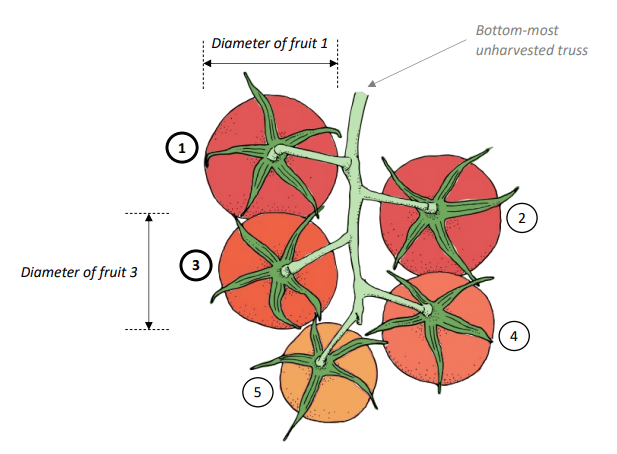
Fruit weight
Average fruit weight for the plant, or the average fruit weight for a location (sector). There are multiple ways to measure fruit weight and collect it through the FarmRoad application.- Take fruit weight of the “going to be harvested fruits” from individual crop registration plant and average it for each crop registration plant.
- Take average fruit weight from harvest:
- For example, divide the weight of the crate (total fruit weight) by the number of fruits.
- Take fruit weight from the sorting machines and average them.
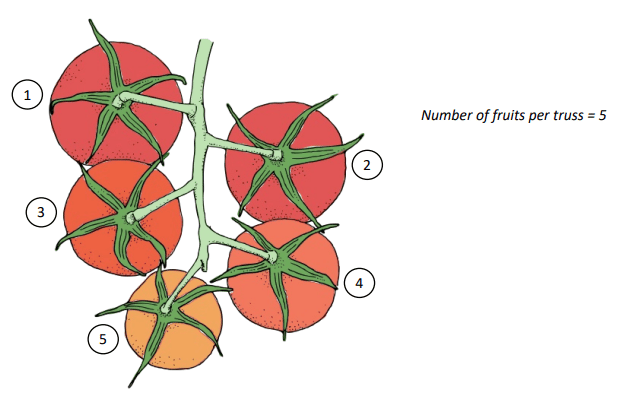
Fruits per truss
Number of fruits per truss that the grower plans to keep for the tomato type or variety being grown; that is, the typical number of fruits kept per truss.