

Source: https://www.waybeyond.io/resources/smart-irrigation-using-data-insights?hsLang=en
21.08.2024 | 3 min readAn introduction to smart irrigation using data insights


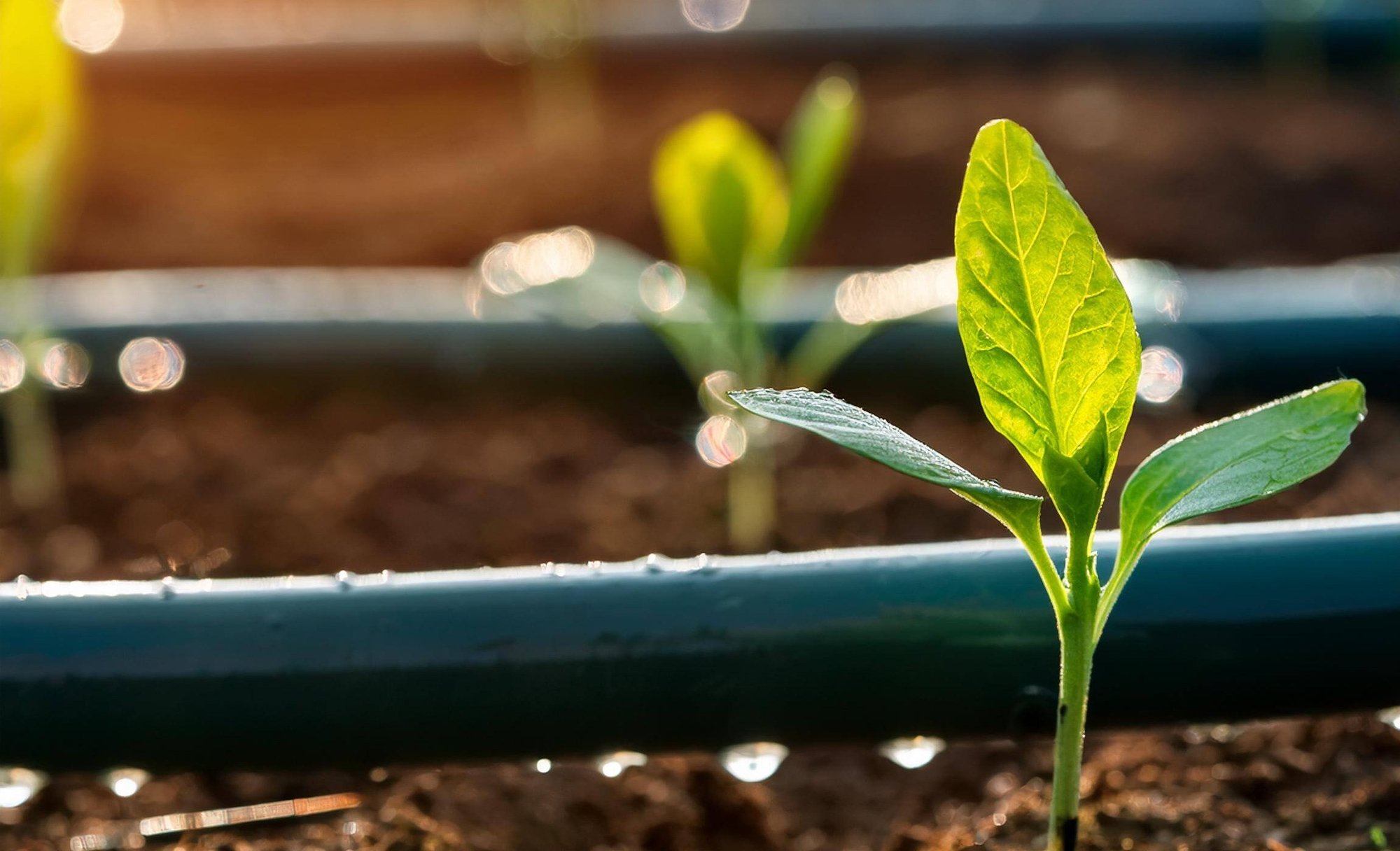 When it comes to protected cropping, irrigation control is a crucial lever to maximizing crop yield and quality. As unpredictable weather patterns, inconsistent water supply, and rising fertilizer costs heighten the strain on growers, knowing exactly how much water to supply and when is more critical than ever. Modern technologies give growers the edge to exert greater control over water inputs and resources while minimizing waste. With data at their fingertips, growers can stay ahead of the curve and make every drop count.
Water, nutrients and plant health — a balancing act
Smart irrigation isn’t just about conserving water; it’s about striking the perfect balance between water, nutrients, and plant health, growers need to understand the needs of each plant to accurately determine the appropriate amount of water and nutrients to give. Providing water and fertilizer to plants when they can’t effectively use them is wasteful and can adversely impact their health. Overwatering can lead to root diseases, while underwatering can stress plants, stunt their growth, and lead to crop failure. Adopting precision irrigation technologies can vastly improve the grower’s ability to respond swiftly to changing conditions and manage water resources more effectively.What is precision irrigation?
Precision irrigation involves applying water and nutrients to plants in exact amounts based on their specific needs. By using technology and data insights, this method ensures that water resources are deployed in the most favourable amounts. For instance, on hot, sunny, and dry days, when plants experience high water loss, if agronomists have real-time data, they can quickly adjust their irrigation management systems. In this scenario, they ensure that adequate water is given while nutrient levels are lowered, preventing plant stress and supporting maximum productivity.The benefits of growing in substrate
Precision irrigation is only part of the equation. Choosing the right growing medium is equally vital in supporting a business’s irrigation strategy. Many growers, particularly in protected cropping, have transitioned to substrate growing. Unlike traditional soil cultivation, hydroponic systems use nutrient-rich water solutions, allowing for superior control over water and nutrient delivery. This allows growers to fine-tune water retention, drainage, nutrient concentration, and pH levels, creating an ideal environment that promotes plant health and increases yield.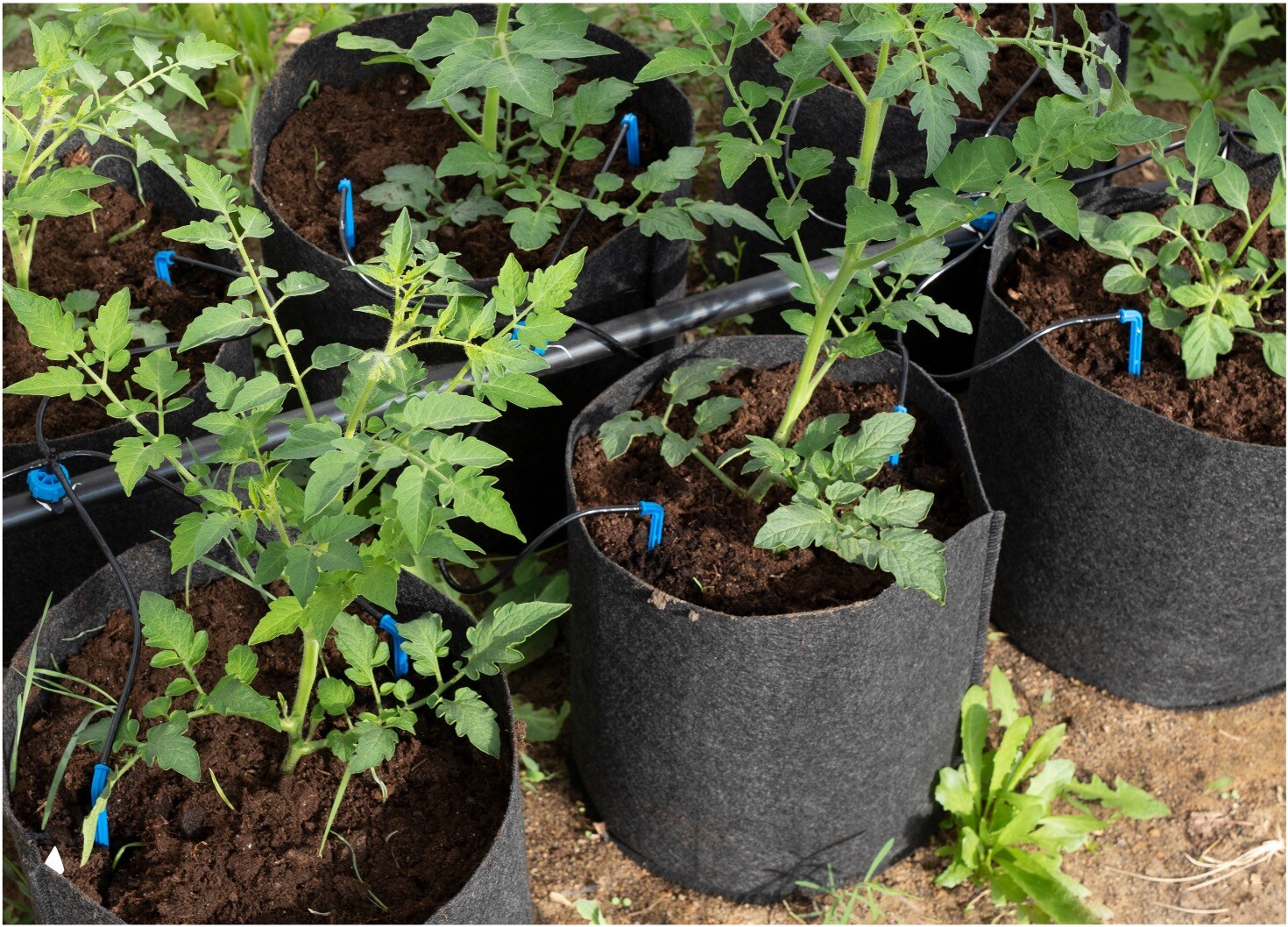
Data: the prerequisite for precision irrigation
While experienced growers generally rely on intuition and past experience to guide their irrigation plans and crop management, this approach is becoming increasingly unreliable due to evolving climate conditions. Many of these growers are working with only limited information available to them, which can lead to poor crop quality and reduced yields as a consequence.“If we have data, let’s look at data. If all we have are opinions, let’s go with mine.” — Jim BarksdaleWith the emergence of new technologies, data has become the foundation of precision irrigation – offering objective insights that enhance the grower’s touch. To make the most of irrigation data, protected cropping growers should focus on the following essential actions:
- Collect the data: Gathering information from relevant sources like real-time digital sensors installed in their farms and from other irrigation monitoring tools.
- Analyze the data: Look for patterns and insights within the data.
- Make informed decisions: Combine data with experience and qualitative analysis.
- Implement changes: Apply these insights to refine irrigation strategies and fertigation practices for future cycles.
- Observe and refine: Monitor the outcomes of your irrigation and adjust strategies based on real-time conditions and forecasts.
Key types of data to consider
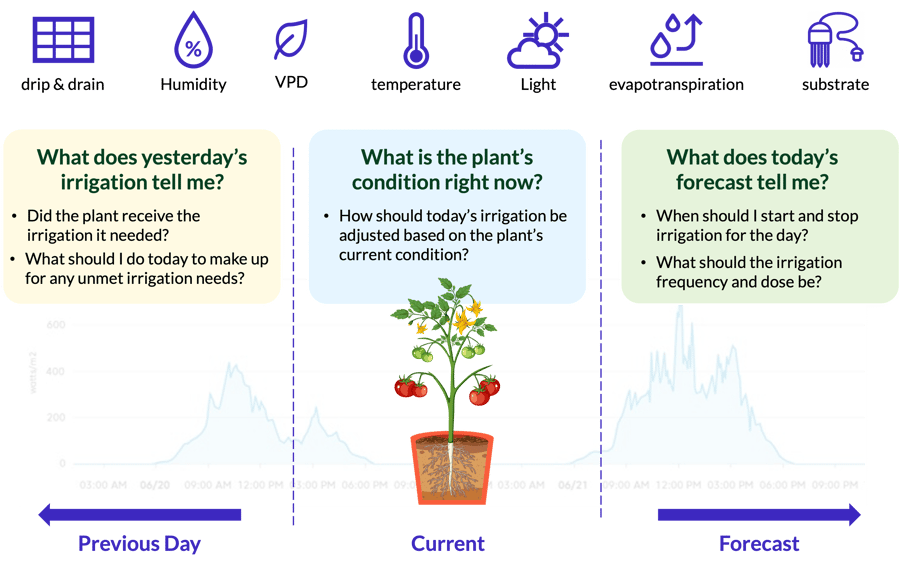
Here’s a closer look at the key types of data to inform your irrigation strategy:Drip and drain data
Drip and drain data refers to the amount of water supplied through drip irrigation and the excess runoff that plants do not absorb. By recording this data daily or multiple times a day, growers can gain valuable insights into their plants’ water and nutrient uptake, responsiveness to environmental conditions, and the overall effectiveness of their irrigation system.Substrate data
Monitoring substrate conditions is essential for precision irrigation and fertigation in soilless cultivation. This includes measuring substrate extract electrical conductivity (EC) to gauge the nutrient concentration available to plants, live root zone EC to assess nutrient uptake in the root area, and substrate moisture content to maintain optimal water levels.Climate data
Historical, current, and forecasted climate data are vital for growers to anticipate and prepare for potential plant stress. By leveraging this information to predict challenging growing conditions, growers can proactively adjust their irrigation schedules, nutrient delivery, and environmental controls to maintain crop integrity and prevent production losses.Evapotranspiration
Farmers can use evapotranspiration (ET) to estimate the amount of water being taken up or used by their fields and crops.Plant data
Direct measurements of plant temperature and other physiological parameters provide insights into crop health and hydration status. When plant temperature exceeds ambient temperature, it can indicate reduced transpiration and potential water stress, signalling the need for timely irrigation adjustments.Plant balance data
Tracking plant balance in vine crops like tomatoes and peppers helps determine whether the crop is in a generative (fruiting) or vegetative (non-fruiting) state. This knowledge allows growers to steer crop growth through their irrigation regime.Modernizing farm data collection, monitoring and actioning
A shift from manual data collection to digital is the step change needed for growers to improve data quality and accuracy on the farm. With digital tools capturing near real-time data on water usage and analysis and visualization of the data in farm management systems, growers can closely monitor their irrigation practices and continually refine their strategies. Using a platform like WayBeyond’s FarmRoad that unifies and visualizes these insights with data on weather, microclimate, and plant health gives a comprehensive overview, helping growers make smarter, more informed irrigation decisions. To stay competitive and to meet the challenge of changing climates, modern protected cropping growers need to adopt these digital agronomy tools now available to them. Check out the next article in our smart irrigation series, where we explore how growers can gain insights into their water use through drip and drain monitoring. Article by Sarah Zhen
Sarah is a Marketing and Communications Specialist at WayBeyond with a wide range of experience in content creation and communications. She enjoys writing about the positive impact of innovation in AgTech.
Article by Sarah Zhen
Sarah is a Marketing and Communications Specialist at WayBeyond with a wide range of experience in content creation and communications. She enjoys writing about the positive impact of innovation in AgTech.
Featured Resources
ALL RESOURCES
- IRRIGATION
- CROP MANAGEMENT
- BLUEBERRY
- ARTICLE
Optimized: Berry Irrigation in Morocco
A leading Moroccan berry grower cut water use by 16% using climate data and ETo-based irrigation… START READING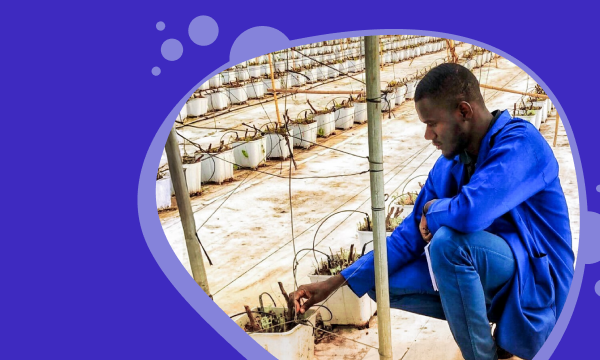
- IRRIGATION
- ARTICLE
- CROP MANAGEMENT
Optimized: An Irrigation Guide
ETo forecasting is a simple but powerful tool for optimizing irrigation every day, in every season… START READING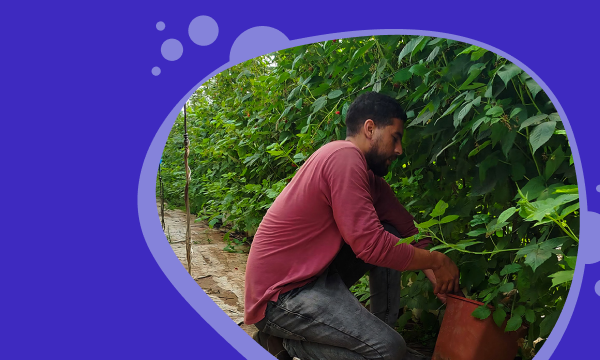
- ARTICLE
- IRRIGATION
- CROP MANAGEMENT
- TOMATO
Optimized: Irrigation
See the strategy behind evapotranspiration-based irrigation planning that helped a greenhouse… START READING
- IRRIGATION
- CROP MANAGEMENT
- CLIMATE
Six essential weather data points for irrigation management
Learn how six key weather data points can help you make smarter irrigation decisions, conserve… START READING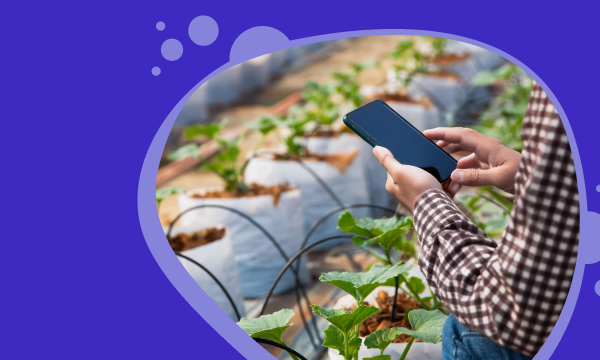
- CROP MANAGEMENT
- IRRIGATION
Five reasons why commercial growers need irrigation management software
A smart approach to water management is key to helping growers tackle water scarcity and climate… START READING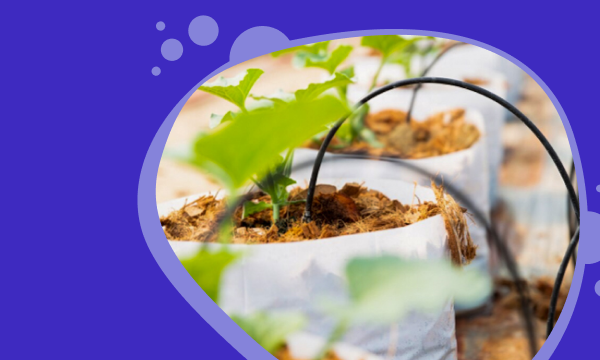
- ARTICLE
- IRRIGATION
- CROP MANAGEMENT
The grower’s guide to drip and drain monitoring
Uncover the vital role of drip and drain monitoring in optimizing drip irrigation farming. START READING
- ARTICLE
- IRRIGATION
- CROP MANAGEMENT
An introduction to smart irrigation using data insights
Explore how protected cropping growers can use data insights to drive smart irrigation practices. START READING.png)
- CUSTOMER CHAMPIONS
- IRRIGATION
Meet Khawla, R&D Manager at African Blue
Learn how Khawla Derstaouieh embraces digital agronomy to optimize irrigation, track pests, and… START READING
- DARRYN KEILLER
- ARTICLE
- IRRIGATION
- INDUSTRY